The Engineering Logic Behind Racing Without Brakes
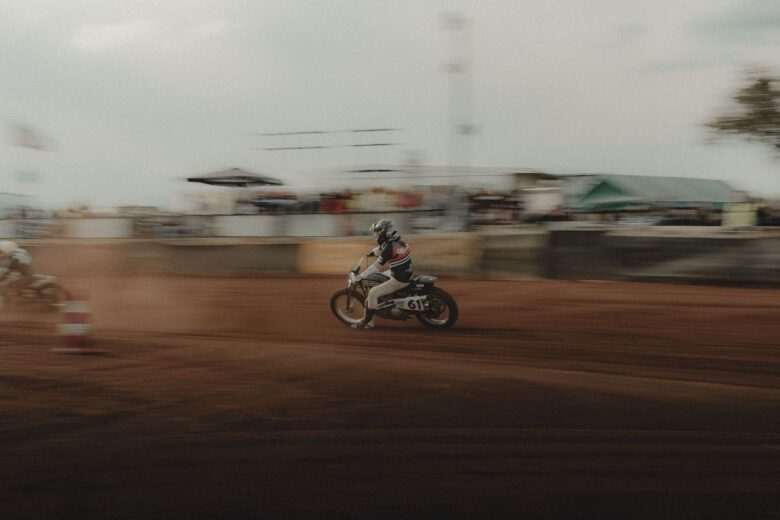
Speedway motorcycles appear to violate the basic rules of motorcycle racing. They use no mechanical brakes, carry a single fixed gear, and enter flat, compacted dirt corners at speeds approaching 70 mph while deliberately sliding the rear wheel. Yet this apparent simplicity is not a compromise. It is a tightly integrated engineering system in which the engine, chassis, tire, track surface, and rider operate as one control mechanism. For anyone studying speedway motorcycle dynamics, the central lesson is clear: removing conventional controls can create a faster and more predictable machine when every remaining input has a precise job.
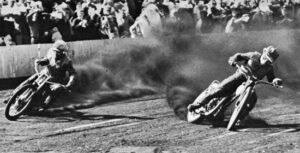
The defining principle is the conversion of forward kinetic momentum into controlled lateral scrub. On a paved circuit, a rider normally reduces speed with hydraulic brakes before turning, then uses tire grip to generate cornering force. Speedway reverses that sequence. The rider carries speed into the turn, unloads the rear tire through throttle and weight transfer, and allows the motorcycle to rotate around a controlled slip angle. Friction against the loose shale dissipates energy while the engine continues to provide drive. The result is a machine that turns, slows, and accelerates through the same coordinated action rather than through separate braking and cornering phases.
Single Gear Methanol Machines and Dynamic Torque Delivery
A modern speedway motorcycle is generally built around a 500cc, single-cylinder, four-stroke engine fueled by methanol. The engine architecture is deliberately compact and highly responsive, with a high compression ratio, mechanical simplicity, and strong torque delivery across the narrow operating range demanded by a short oval. Methanol supports a high rate of fuel flow and provides useful charge-cooling effects, allowing the engine to operate under severe compression and combustion loads. Exact specifications vary by manufacturer, class, and regulation, so claims about a universal compression ratio or a single standard output should be treated cautiously. The governing framework remains the FIM track racing rules.
Power is sent through a direct-drive drivetrain with one fixed gear. That arrangement removes the interruption caused by clutch modulation and gear changes while the motorcycle is already at a large lean angle and high yaw rate. The rider can keep the engine in its useful power band and make fine adjustments with the throttle. Because there is no need to coordinate a shift while balancing a sliding motorcycle, the drivetrain becomes an immediate link between the rider”s right hand and the rear contact patch. A small throttle opening can increase rear-wheel drive and tighten the line; a reduction can allow the rear to slow, widen its slip, or settle back into grip.
| Feature | Speedway motorcycle | Conventional circuit motorcycle |
|---|---|---|
| Engine format | Typically 500cc single-cylinder four-stroke | Often multi-cylinder, with a broader rev range |
| Fuel and response | Methanol-based fuel and immediate torque delivery | Usually gasoline, with power managed through wider gearing |
| Transmission | One fixed gear | Multiple gears and a shifting system |
| Braking | No conventional mechanical brakes | Hydraulic disc brakes front and rear |
| Cornering surface | Loose or compacted shale dirt | High-grip asphalt |
| Primary corner control | Throttle, rear slip, body position, and steel shoe | Braking pressure, tire grip, lean angle, and steering |
The lightweight chassis is equally important. Speedway machines are designed for a roughly 300-meter oval rather than for changing road-circuit conditions. Their geometry, low center of gravity, narrow bodywork, and dirt deflectors support repeated left-hand slides. The absence of unnecessary equipment reduces mass and keeps the machine responsive when the rear tire is no longer pointing in the same direction as the frame. In conventional racing, complexity can expand the performance envelope. In speedway, simplicity sharpens the relationship between rider input and vehicle behavior.
The Mechanics of Kinetic Energy Dissipation on Dirt
When the rider initiates a powerslide, the rear tire does not simply lose all grip. It enters a controlled state of partial adhesion and partial sliding. The tire continues rotating, driven by the engine, but its direction of travel differs from the direction in which it is pointing. That difference creates a slip angle. The tire scrubs across the shale, generating resistance that reduces forward speed while the engine”s torque prevents the rear wheel from becoming a passive, locked skid. This distinction matters because a locked rear tire would offer less directional control and could produce an abrupt, unstable transition when grip returned.
Speedway tracks are prepared from materials such as compacted shale or granite-based dirt. Their behavior changes with moisture, temperature, preparation, rubber accumulation, and the amount of loose material on the racing line. The diamond-pattern rear tire is designed to penetrate and move that surface, producing both forward thrust and lateral resistance. The precise balance is not fixed. A rider must constantly read how much the tire is biting and how quickly it is sliding. The most effective drift is not the largest visible angle; it is the angle that preserves acceleration while scrubbing enough energy to place the motorcycle at the apex.
- Small slip angle: More mechanical grip and acceleration, but less rotation and less speed reduction.
- Moderate slip angle: A useful balance of lateral scrub, controllable yaw, and forward drive.
- Excessive slip angle: Reduced drive, increased instability, and a greater risk of the rear stepping away faster than the rider can correct.
Hydraulic brakes would introduce a fundamentally different force into this system. A front brake application on loose gravel could overload the front contact patch, drive the fork into compression, and cause the tire to knife into a softer patch of shale. That is the classic front-end tuck. A sudden rear brake lock could also create a snap when the tire regained grip. Conventional braking is not inherently unsafe, but the narrow, low-grip surface and continuous sideways attitude make abrupt longitudinal force difficult to separate from steering and yaw. Speedway avoids that conflict by using throttle-driven rear slip as a progressive, adjustable form of deceleration.
Step-by-Step Anatomy of a High-Speed Speedway Drift
A speedway corner is best understood as a sequence of load transfers rather than one dramatic slide. The motorcycle may appear to be traveling sideways in a single gesture, but the rider is managing changing forces at entry, rotation, apex, and exit. The most successful riders make these transitions look continuous because each phase is prepared by the one before it.
- Corner entry commitment: The rider approaches with substantial speed and uses body position, throttle pitch, and weight transfer to prepare the rear tire for breakaway. The machine is placed toward the chosen line before the turn becomes fully committed. Entering too slowly can be just as damaging as entering too quickly because the rear tire may not generate the required rotation.
- Counter-steering and traction break: A brief steering input starts the motorcycle turning, while throttle application overcomes available rear traction. The rear wheel moves outward, creating yaw. Counter-steering is not a one-time command; it is continuously adjusted to keep the front wheel aligned with the intended path while the rear slides.
- Left-leg pivot skid: The rider extends the left leg and places a steel shoe against the track. This outrigger is not merely protective footwear. It acts as a stabilizing contact point, helping support the rider and influence the combined rider-machine roll axis during the slide. The shoe can prevent excessive lean and provide a reference for how aggressively the chassis is rotating.
- Apex power modulation: At the apex, throttle position becomes a major determinant of turning radius. More drive can push the rear outward and tighten the motorcycle”s rotation, while a smoother or reduced input can let the machine settle and follow a wider line. Handlebar angle remains important, but it does not independently define the trajectory. The rear tire”s slip state is doing much of the steering work.
- Straightaway unwinding: As the motorcycle points toward the exit, the rider progressively reduces the drift angle and allows the rear tire to recover mechanical grip. Throttle is increased as the machine straightens, converting the remaining engine torque into forward acceleration. A sudden grip recovery can unsettle the chassis, so the transition must be deliberate.
This process explains why the sport rewards precision more than brute force. A rider who simply opens the throttle produces wheelspin without useful drive. A rider who avoids all slip cannot rotate the motorcycle tightly enough. The target is a moving compromise between tire adhesion, engine torque, surface condition, and line choice. Track preparation can change that compromise from one heat to the next, making adaptation a core technical skill.
Rider Biomechanics and Center of Mass Manipulation
At roughly 70 mph on a small oval, the rider experiences continuous lateral acceleration rather than a single isolated cornering load. The motorcycle is pitched and yawed while the rear tire moves outward, and the rider must resist the centrifugal tendency to be pulled away from the turn. Wide handlebars provide leverage, but the arms cannot carry the entire load. The rider”s hips, shoulders, knees, and extended leg work together to keep the combined center of mass in a usable position.
The steel skid sole becomes a structural balance point. By placing it near the surface, the rider creates a third point of support alongside the two tires, although it should not be understood as a normal wheel or a substitute for chassis stability. Its value lies in controlling roll and preventing the body from collapsing inward during the drift. Effective posture keeps the torso positioned to counter the outward swing while leaving the hands free for sensitive steering and throttle adjustments.
- Keep the upper body stable enough to absorb chassis movement without stiffening the arms.
- Use the handlebars for leverage and direction, not as the sole means of controlling the slide.
- Allow the extended leg and steel shoe to support balance during the most aggressive phase of rotation.
- Coordinate body movement with throttle changes so that weight transfer does not surprise the rear tire.
The rider is therefore part of the suspension and traction system. A change in body position alters load distribution between the front and rear tires, changes how readily the rear breaks traction, and influences how quickly the motorcycle recovers grip. This is one reason speedway machines cannot be judged by engine output alone. The package works because its controls are designed around human movement, track friction, and repeatable corner geometry.
Mastering Momentum Through Purpose-Built Simplicity
Speedway racing strips motorcycle control down to its essential variables. There are no brake levers to manage, no multiple gears to select, and no electronic traction strategy to hide an imprecise input. Instead, the rider controls momentum through throttle response, steering pressure, body position, and the carefully managed friction of a sliding rear tire. Forward kinetic energy is not eliminated before the corner; it is redirected and dissipated laterally through the shale.
That mechanical minimalism remains relevant because it exposes the fundamentals that more complex racing systems can obscure. The fixed gear keeps torque delivery immediate, the methanol engine supplies a controllable burst of drive, and the brakeless chassis makes every transition visible in the rider”s technique. Lateral scrub and throttle modulation become trajectory controls, not emergency corrections. The result is a racing motorcycle that turns without traditional brakes by making momentum itself part of the steering system, proving that fewer components can produce greater precision when the entire machine is engineered around one purpose.