
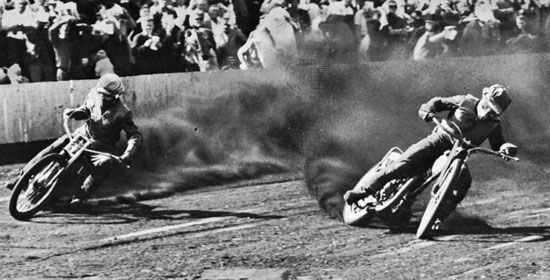
Why Pure Methanol Remains the Gold Standard Fuel in Speedway Competition The Relentless Physics of Speedway Racing A 500cc speedway engine lives in an unusually severe thermal environment. It is a large-displacement single cylinder, commonly operated at sustained wide-open throttle, fitted to a motorcycle that has no radiator and relies heavily on air movement, exposed …

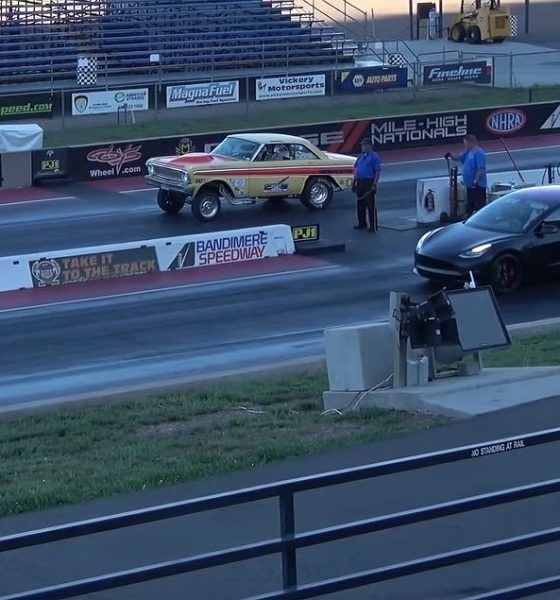
The Anatomy of the First Two Tenths In speedway, the race for track position often begins and is partially decided before the first turn has fully arrived. The initial 0.2 seconds after the tapes rise is a compressed operational problem involving engine speed, clutch engagement, rear-tire loading, rider posture, and reaction timing. A launch that …

The Science of Dirt Oval Dynamics Dirt oval racing is decided long before horsepower reaches the rear wheels. The competitive advantage comes from understanding how water, soil structure, compaction, temperature, and traffic combine to create a surface that changes from lap to lap. A well-prepared track can offer tremendous bite at the start of a …
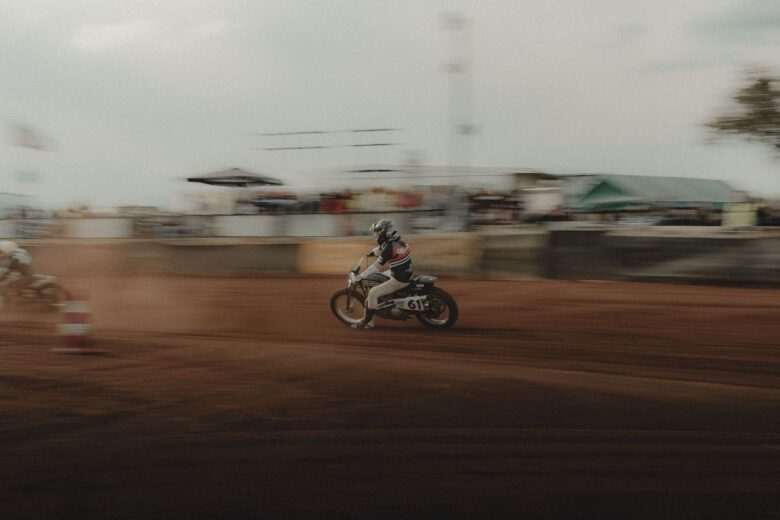
The Engineering Logic Behind Racing Without Brakes Speedway motorcycles appear to violate the basic rules of motorcycle racing. They use no mechanical brakes, carry a single fixed gear, and enter flat, compacted dirt corners at speeds approaching 70 mph while deliberately sliding the rear wheel. Yet this apparent simplicity is not a compromise. It is …