
Why Pure Methanol Remains the Gold Standard Fuel in Speedway Competition
The Relentless Physics of Speedway Racing
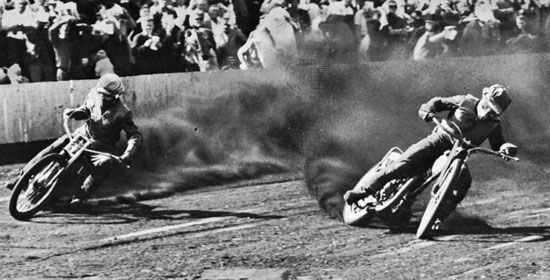
A 500cc speedway engine lives in an unusually severe thermal environment. It is a large-displacement single cylinder, commonly operated at sustained wide-open throttle, fitted to a motorcycle that has no radiator and relies heavily on air movement, exposed engine surfaces, fuel evaporation, and short periods of reduced load for heat control. During a race, the engine is not simply producing power. It is repeatedly converting combustion energy into acceleration while the motorcycle slides through shale corners, where speed, airflow, and throttle position change abruptly.
That is why neat methanol is not merely a nostalgic fuel choice. It is a deliberate engineering response to a thermal and mechanical problem. Speedway demands intense torque when the rear tire is already near the limit of traction, particularly as the rider drives out of a slow corner with the engine heavily loaded. Pure methanol helps cool the incoming charge, resists abnormal combustion, and gives the tuner a wider margin against the piston, cylinder, valve, and head temperatures that would quickly become dangerous in an uncooled engine.
Thermodynamics of Latent Heat and Internal Cylinder Cooling
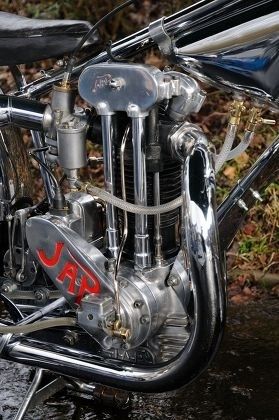
The key advantage begins before ignition. When liquid methanol changes phase and becomes vapor, it absorbs a substantial quantity of heat from its surroundings. In a speedway engine, that heat is drawn from the intake tract, the incoming air, the piston crown, and the combustion chamber surfaces. The effect is an internal heat sink positioned exactly where external cooling is least effective.
Methanol boils at approximately 64.6 degrees Celsius at normal atmospheric pressure, according to the physical-property data compiled for Methyl Alcohol. Its high latent heat of vaporization means that a meaningful portion of the fuel’s cooling contribution occurs as it atomizes and evaporates, rather than only after combustion. Gasoline also absorbs heat during vaporization, but its lower effective evaporative cooling capacity provides less protection under the sustained cylinder pressures and elevated piston temperatures typical of speedway racing.
The comparison is easiest to understand as a system rather than as a single specification. Methanol contains less chemical energy per unit mass than gasoline, so the engine must consume more fuel to produce comparable power. That apparent disadvantage becomes a cooling benefit because more liquid mass passes through the intake and changes phase inside the engine. The charge is cooled before ignition, reducing its tendency to autoignite and lowering the thermal burden imposed on the piston and cylinder head.
| Characteristic | Pure methanol | Racing gasoline |
|---|---|---|
| Energy per unit mass | Lower | Higher |
| Fuel mass required for equivalent power | Higher | Lower |
| Evaporative cooling contribution | Very high | Lower |
| Knock resistance | Strong | Dependent on formulation and tune |
| Primary speedway benefit | Charge cooling and combustion margin | Energy density and reduced fuel flow |
For an air-cooled engine, this is decisive. External airflow can be restricted when the motorcycle is yawed into a slide, when the rider is following another machine, or when the engine is operating at high load but relatively low road speed. Fuel evaporation continues to cool the charge under those conditions. It cannot eliminate every thermal risk, and an excessively lean mixture or incorrect ignition timing can still destroy an engine, but it provides a form of cylinder cooling that does not depend on a radiator, pump, or uninterrupted forward motion.
Compression Ratios and Knock Resistance Under Brutal Loads
Speedway engines benefit from high compression because compression increases the pressure and temperature of the mixture before ignition, improving the potential for efficient expansion and torque. A static compression ratio around 15:1 is an aggressive proposition for gasoline, especially when the engine is loaded hard at low speed and then asked to accelerate the motorcycle through a long power slide. Methanol makes that configuration more practical because its resistance to knock allows the tuner to use higher cylinder pressure before uncontrolled combustion begins.
The term “15:1” should not be treated as a universal target. Effective compression depends on valve timing, trapped charge, combustion-chamber shape, piston crown design, squish clearance, mixture preparation, ignition timing, exhaust behavior, and operating temperature. High compression can increase starter load, gasket stress, blow-by, friction, and tuning sensitivity. Methanol expands the usable window, but it does not remove the need for a balanced engine combination.
Its advantage is particularly valuable during corner exits. At that moment, the engine may be turning relatively slowly while cylinder filling and throttle opening are increasing rapidly. The mixture is exposed to high pressure and hot surfaces for a demanding portion of the cycle. Methanol’s knock resistance helps prevent end-gas autoignition and reduces the likelihood that combustion pressure will arrive too early or too violently. That protects the piston crown, ring lands, bearings, head gasket, and crankshaft from repeated shock loading.
- Use compression as part of a complete combination. A high ratio cannot compensate for poor chamber design, unsuitable cam timing, or inadequate mixture distribution.
- Set ignition timing conservatively before optimizing power. Methanol can suppress audible knock, so the engine may be suffering damage before the tuner hears a clear warning.
- Watch temperature and plug condition together. A clean-looking plug does not prove that the piston crown and exhaust valve are operating safely.
- Protect the mechanical package. Higher cylinder pressure demands suitable fasteners, gasket clamping, piston strength, ring selection, and crankshaft condition.
Comparative property data should always be interpreted with the actual engine in mind. An authoritative fuel properties database provides a useful reference for energy content, stoichiometric behavior, and related fuel characteristics, but track calibration still has to be established through controlled testing. The goal is not simply the highest compression ratio or most advanced timing. The goal is the highest repeatable torque output that survives a full meeting.
Volumetric Flow and Carburetion Demands on Shale
Methanol’s cooling and knock advantages require a substantial fuel-flow penalty. Its stoichiometric air-fuel ratio is commonly treated as roughly 6.4:1 by mass, compared with approximately 14.7:1 for conventional gasoline. Exact values vary with fuel composition and measurement method, but the practical result is clear: the engine needs far more methanol by mass, and an even larger volume of liquid must pass through the carburetor because methanol is less energy-dense.
That extra flow changes every part of carburetion. Main-jet size matters, but needle diameter, taper, needle-jet clearance, float height, fuel-head stability, and throttle position often determine whether the engine is clean and safe during acceleration. Speedway throttle use is not a steady dyno pull. The rider repeatedly transitions from partial throttle to full throttle while the motorcycle is changing attitude and load. A needle profile that is acceptable on the main jet can still create a dangerous lean hole during the most heavily loaded part of a corner exit.
- Establish fuel delivery capacity. Confirm that the tank outlet, hose, filter, float valve, and carburetor can supply the required volume without restriction.
- Set the needle and needle jet for acceleration. Tune the transition zone before making small main-jet changes, because the rider spends significant time away from a perfectly steady full-throttle condition.
- Verify the full-load mixture. A wideband system can help record lambda, engine speed, and throttle or pressure data during dyno and track testing, while plug reading and engine inspection remain essential.
- Recheck after every hardware change. Air temperature, fuel temperature, exhaust configuration, gearing, and engine sealing can all alter the required calibration.
The larger volume of liquid entering the intake also contributes to charge cooling. That cooling is not free. Excess fuel can wash oil from the cylinder wall, dilute crankcase oil, slow combustion, and reduce response. The useful result comes from accurate metering, not from simply making the mixture richer. A successful speedway setup therefore treats carburetion as both a power system and a thermal-management system.
The Practical Mechanics of Engine Survival and Maintenance
Methanol’s chemical benefits create maintenance obligations. It can attract moisture, and water contamination can promote corrosion in tanks, carburetors, fittings, and steel components. After a race meeting, teams should drain fuel where appropriate, inspect the carburetor and fuel lines, and follow a consistent storage and flushing procedure suited to the materials used. Bare aluminum, plated components, rubber parts, and fuel-cell materials should be checked for compatibility rather than assumed to be unaffected.
Oil control is equally important. Methanol that escapes combustion can pass the rings and dilute the lubricant, especially when the engine is over-rich, cold, repeatedly started, or operated with incomplete combustion. Fuel dilution reduces viscosity and weakens the oil’s protective film. Oil condition, smell, level, and service interval therefore deserve the same attention as jetting and ignition timing. Top-end inspections should be scheduled according to operating hours and observed wear, not postponed until a power loss becomes obvious.
- Inspect piston crowns for peppering, detonation marks, cracking, and abnormal deposits.
- Check ring seal, ring-land condition, cylinder-wall finish, and evidence of fuel wash.
- Examine the exhaust valve, seat, guide, and spring assembly for heat-related wear.
- Change diluted oil promptly and investigate the cause rather than treating dilution as normal.
- Record jetting, weather, fuel batch, ignition settings, and engine temperature after each meeting.
Modern synthetic or oxygenated fuels may offer useful energy density, emissions, or supply advantages, and some can be tailored to specific combustion systems. They do not automatically reproduce methanol’s combination of high fuel flow, strong evaporative cooling, knock resistance, low cost, and mechanical simplicity. A replacement fuel may require different injectors, sensors, seals, compression, ignition, and calibration. In a tightly regulated speedway environment, additional complexity can reduce the practical value of a theoretical efficiency gain.
Engineering Reality Trumps Modern Alternatives
Pure methanol remains dominant because speedway fuel selection is governed by the engine’s worst operating moments, not by laboratory energy density alone. The critical moment is the sustained, heavily loaded power slide when airflow is limited, cylinder pressure is high, and the rider needs immediate torque. Methanol absorbs heat as it vaporizes, tolerates aggressive compression, and allows a simple air-cooled engine to operate with a useful margin against knock and seizure.
That margin supports a durable form of mechanical simplicity. The engine does not need a radiator, water pump, thermostat, or electronic cooling strategy to manage every transient. It still needs disciplined jetting, accurate ignition control, careful oil service, corrosion prevention, and regular inspection. But those tasks are familiar, measurable, and directly connected to the fuel’s behavior. For speedway builders and mechanics, the enduring lesson is practical: when a racing engine must survive brutal thermal loading with minimal cooling hardware, the chemical properties of pure methanol remain more valuable than the convenience of a higher-energy alternative.